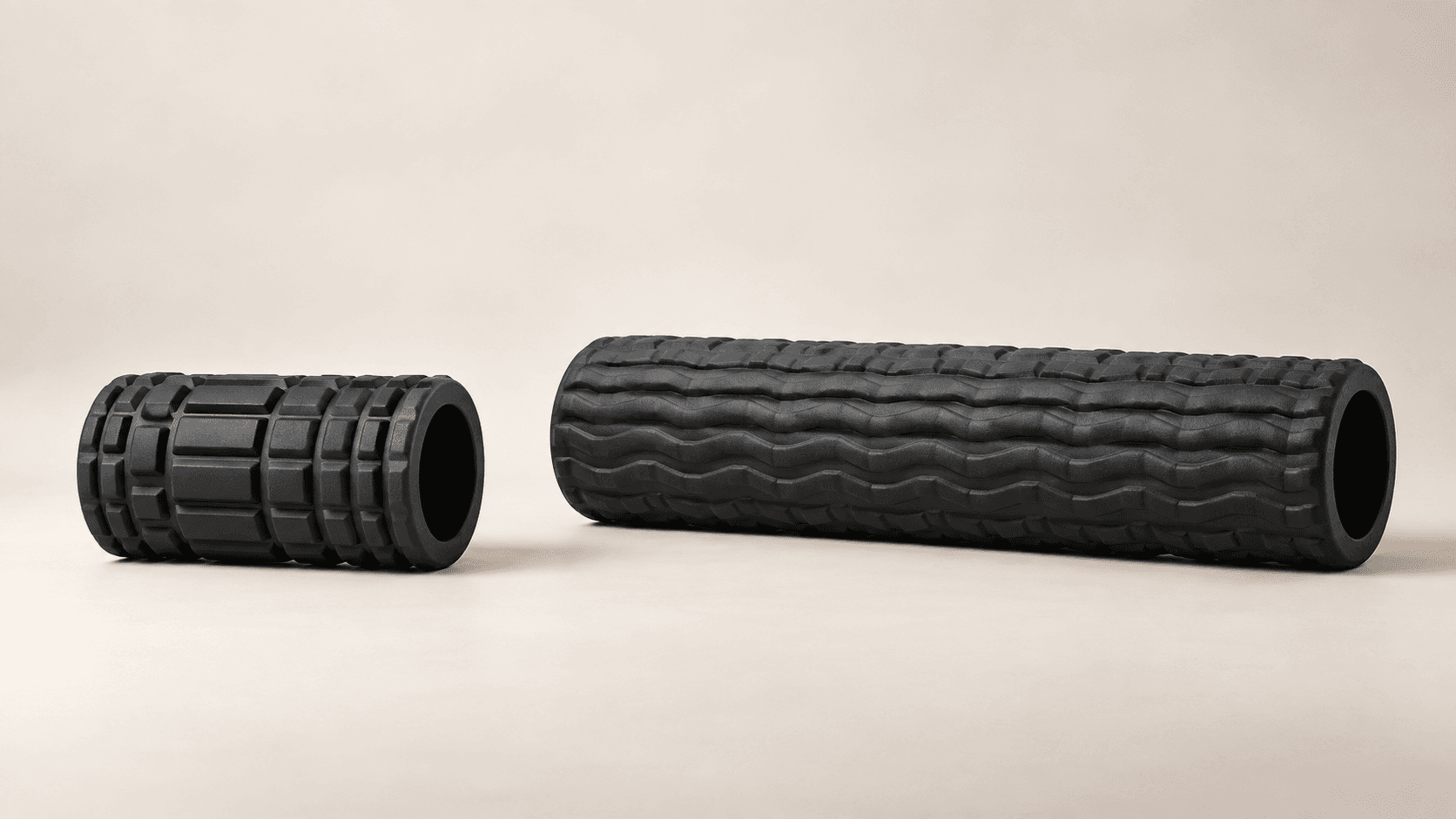
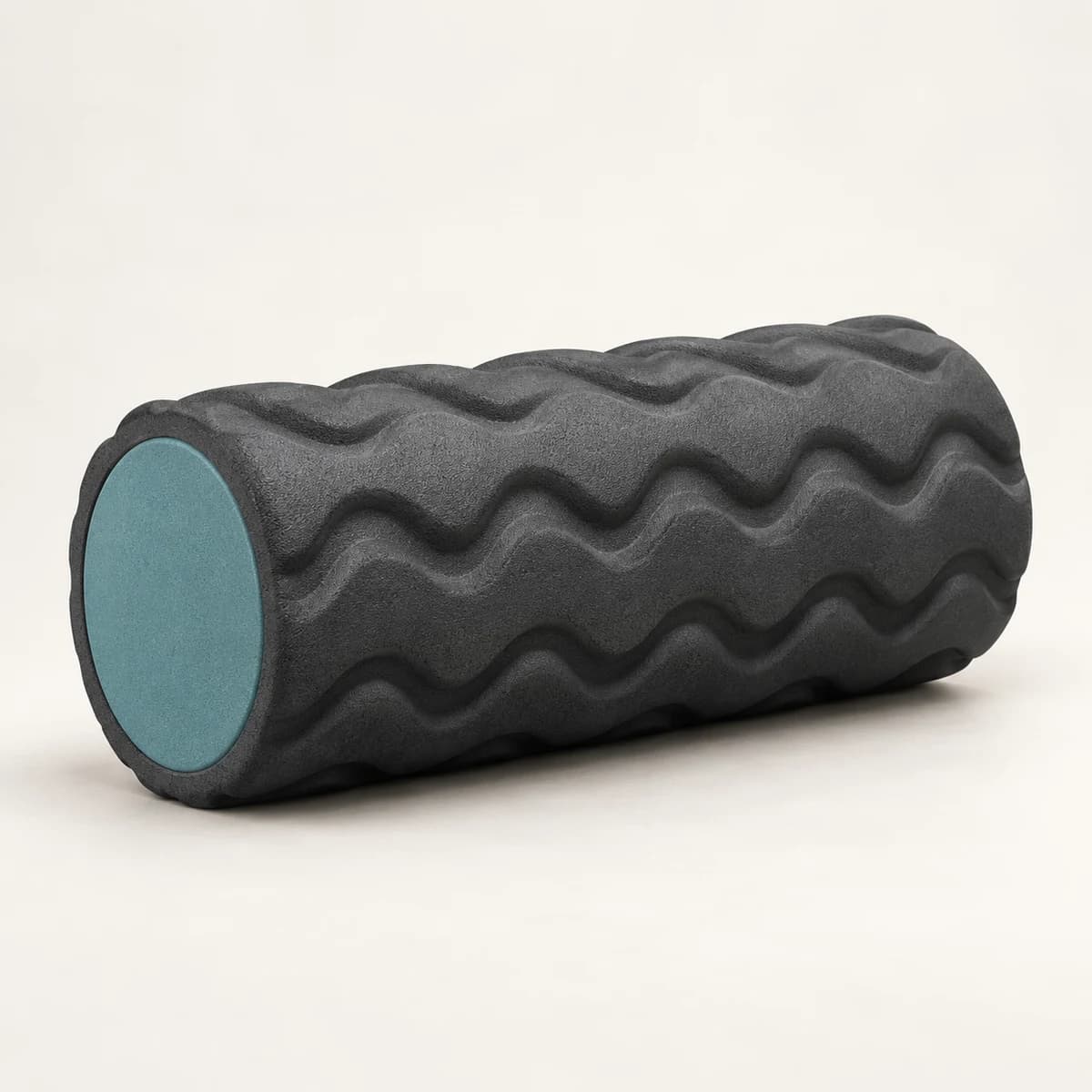
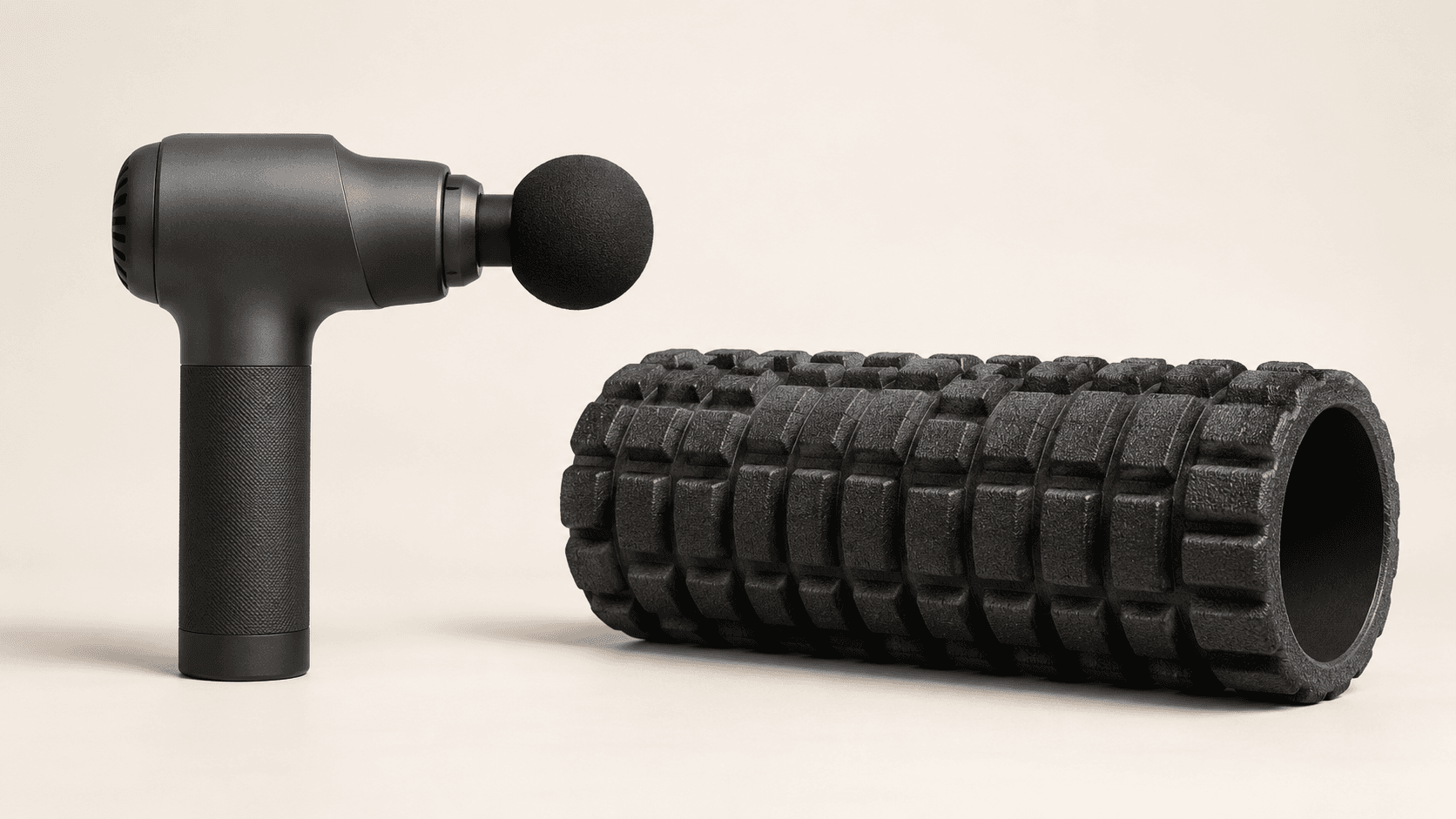
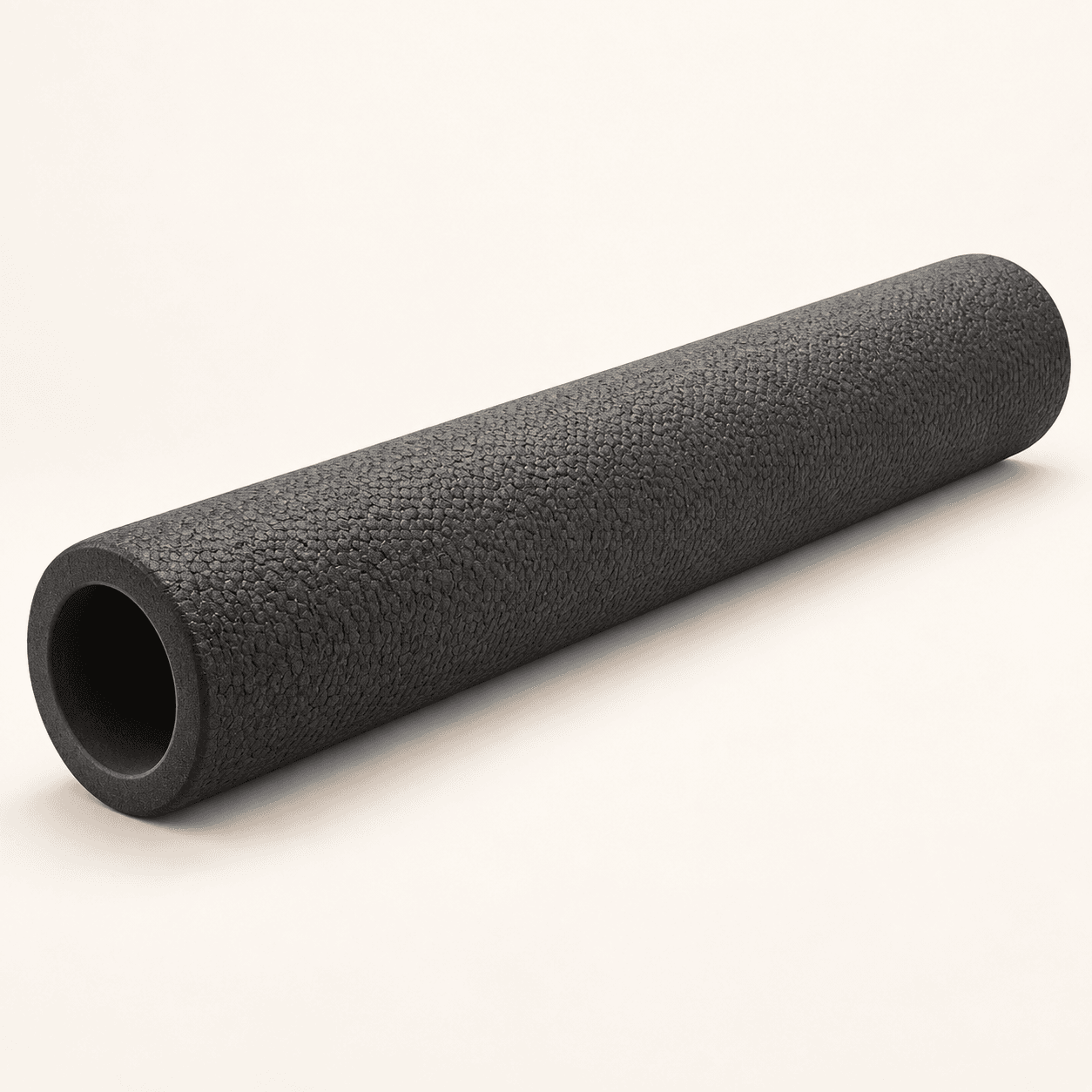
 Illustrative category image — not the exact product
Review basis and testing disclosure
RecoveryToolLab has not hands-on tested the TriggerPoint GRID 2.0. This review uses current TriggerPoint specifications, the verified Amazon identity and independent systematic reviews of foam rolling. No live price, consumer rating or invented score is presented.
What the GRID 2.0 is
The GRID 2.0 is a 26-inch unpowered foam roller with a textured EVA foam exterior over a rigid hollow core. It is the longer-format alternative to the 13-inch GRID 1.0.
The additional length changes positioning, support and storage. It does not prove a larger recovery effect.
Design assessment
Twenty-six-inch surface
The longer surface can provide more lateral room for body positioning and broad-supported movements. It also takes more floor and storage space than a compact roller.
Hollow core
The rigid core is intended to maintain shape and consistent resistance. RecoveryToolLab did not test long-term durability or compare pressure feel with solid foam.
Textured EVA exterior
Raised zones alter the contact geometry. Manufacturer descriptions of massage-like surface patterns explain design intent, not equivalence with a clinician's hands.
No charging or software
The roller works without a battery, app or account. Safe use still requires adequate space and controlled body positioning.
Evidence for foam rolling
A meta-analysis reported possible acute range-of-motion changes in healthy adults, while noting that foam rolling was not superior to stretching. Read the review. A training-focused review also found limited evidence for broader performance effects. Read the training review.
Those findings do not prove that this model permanently changes fascia or that a 26-inch roller is more effective than a shorter one.
Potential advantages based on verified characteristics
- Longer 26-inch rolling surface
- EVA foam over a hollow core
- Textured contact pattern
- No charging, app or account
- More positioning width than the GRID 1.0
- Verified Amazon US product destination
Important limitations
- RecoveryToolLab has not tested firmness, stability or durability.
- The longer body requires more storage space.
- A rigid core may feel too firm for pressure-sensitive users.
- Surface texture does not establish superior clinical outcomes.
- Foam-rolling evidence is not specific to this product.
Who may consider it
It may suit someone who wants a longer unpowered roller and has enough space for the 26-inch format. It may be useful where a broader support surface makes positioning easier.
Who may want to skip it
Someone with limited storage, frequent travel or sensitivity to firm contact may prefer a shorter or softer roller. Avoid direct pressure over acute injury, marked swelling, bruising or altered sensation.
Safety considerations
Begin with light, controllable pressure and avoid prominent bones, joints and sensitive anatomy. Stop if rolling causes sharp pain, numbness, tingling or worsening symptoms.
Alternatives
The GRID 1.0 offers the same basic construction in a shorter 13-inch format. A smooth foam roller provides more uniform contact. A massage ball targets a smaller area and can be used against a wall.
Value discussion without a price claim
The main value question is whether the extra length improves the user's positioning enough to justify the storage footprint. Current price and availability should be checked at Amazon.
Final verdict
The GRID 2.0 is a clearly specified longer roller, not a more advanced recovery method. It is a practical option when added width matters and space is available; the documentation does not establish superior outcomes over simpler rollers.
Our review methodology
We separated construction facts from promotional claims, checked the Amazon identity and used independent foam-rolling research only for category context. No hands-on performance or price claim was inferred.
Did RecoveryToolLab test the GRID 2.0?
No. Firmness, comfort, stability, surface wear and durability were not hands-on tested.
Is the GRID 2.0 twice as effective because it is twice as long?
No. The documented length mainly changes positioning and storage. It does not establish a larger recovery effect.
Sources and references
Product specifications were checked against current TriggerPoint documentation and the verified Amazon US product record on October 6, 2026.
- Manufacturer documentation reviewed: TriggerPoint GRID 2.0 product information
- Amazon US product identity verified: ASIN B006GUC9KC
- Meta-analysis of acute foam rolling and range of motion
- Systematic review of foam-rolling training