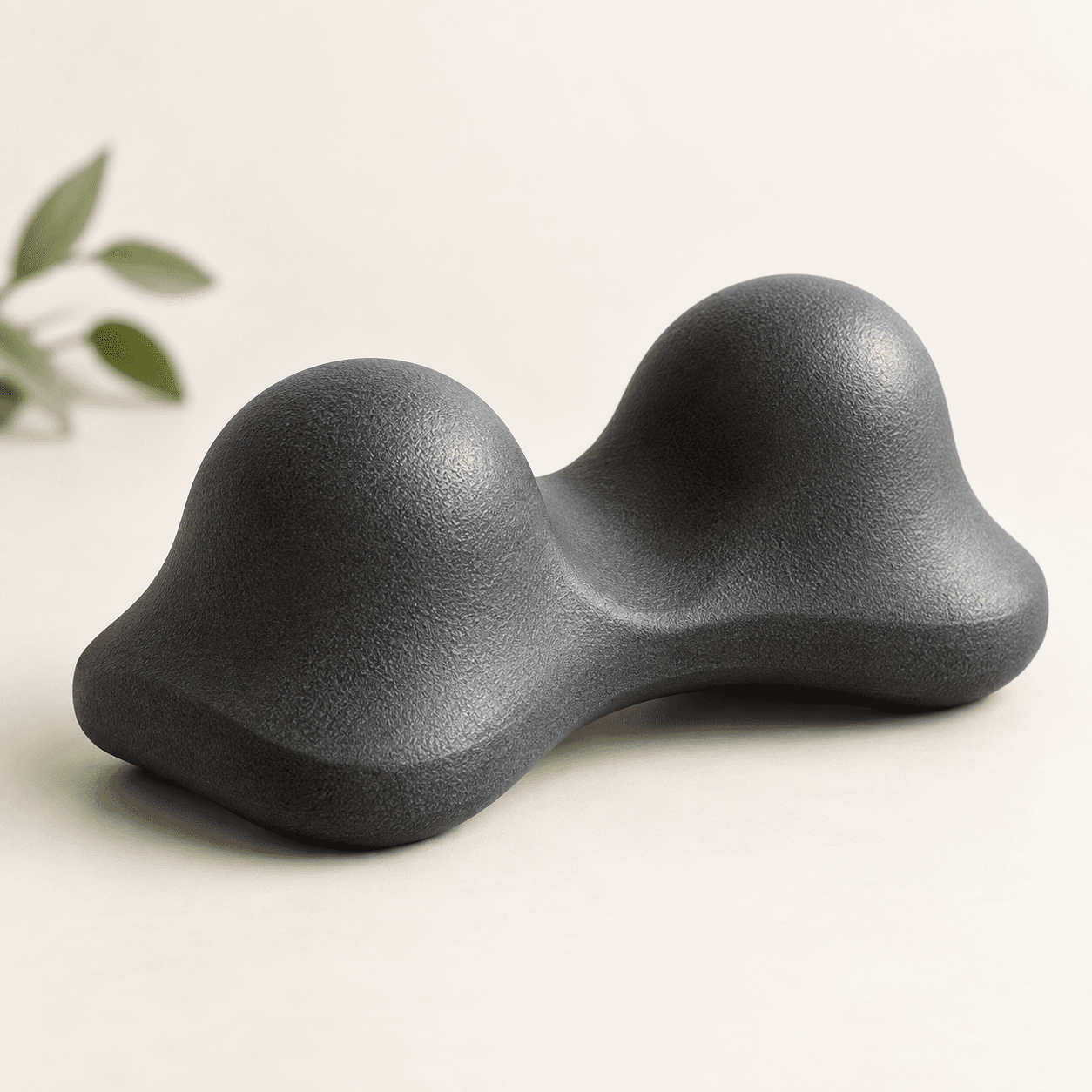
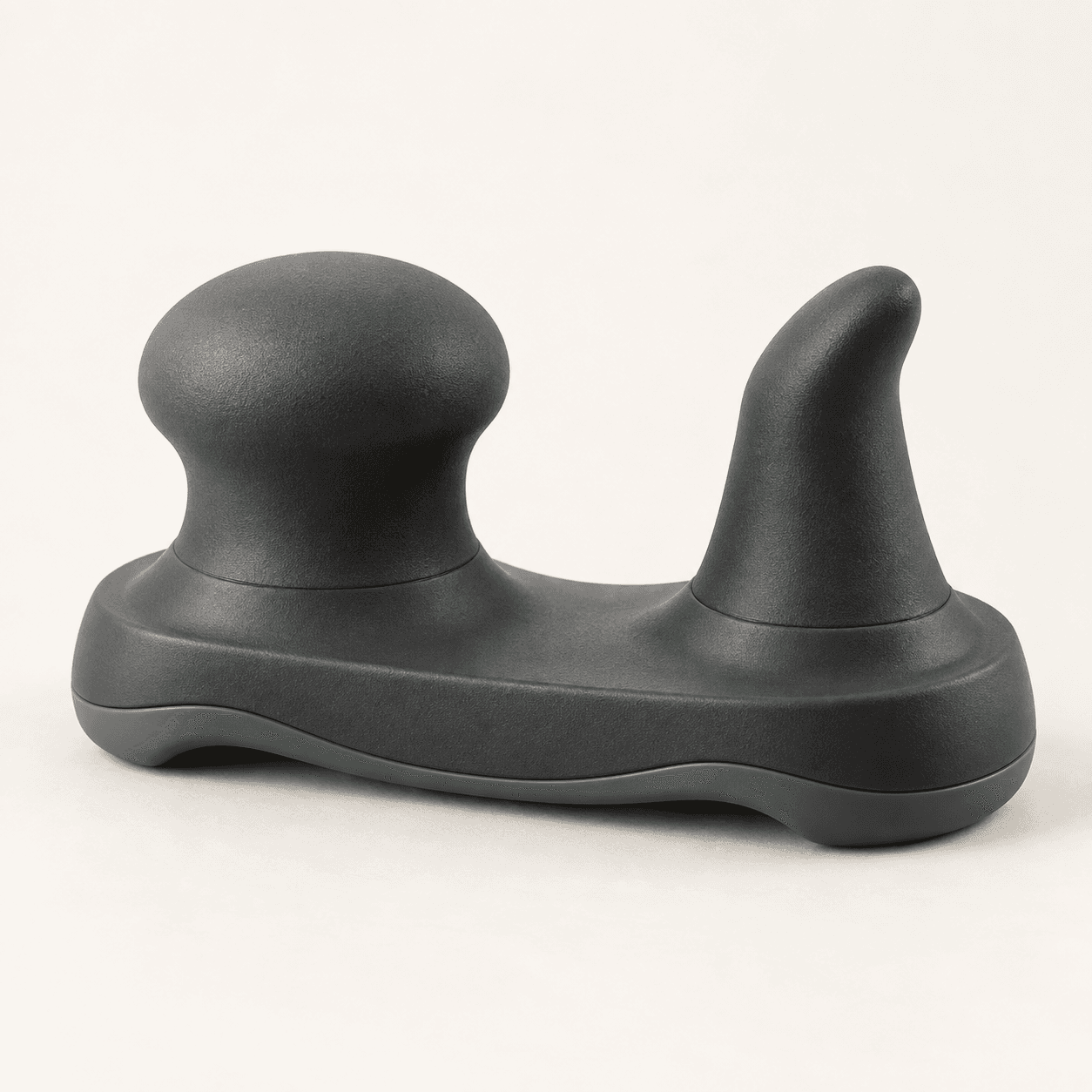
 Illustrative category image — not the exact product
Review basis and testing disclosure
RecoveryToolLab has not hands-on tested Core Nexus. This review uses current Nexus Health Tools documentation and the verified Amazon product identity. No live price, consumer rating, diagnostic claim or invented score is presented.
What Core Nexus is
Core Nexus is a compact manual self-pressure tool with two differently shaped contact tips. Manufacturer documentation describes a broad tip and a narrower angled tip in an unpowered body documented at under one pound.
The design changes how pressure can be concentrated. It cannot identify why a hip feels tight or prove that pressure will produce a lasting structural change.
Design assessment
Two contact shapes
The broad and narrower tips provide distinct contact geometries. That may help a user choose a more tolerable contact area, but it is not evidence that two shapes produce a better health outcome.
Compact unpowered format
The tool requires no battery, app or charging. Its usefulness depends on body position, pressure control and the user's ability to place it safely.
Fixed body
There are no moving controls or adjustable intensity settings. Pressure is changed by repositioning the tool or shifting body weight.
Evidence context
Evidence for self-applied localized pressure is not specific enough to validate the Core Nexus geometry as a treatment. Sensation changes during pressure do not diagnose a muscle, fascia, joint, nerve or abdominal problem.
The most defensible evaluation is therefore based on verified shape, positioning, practical control and safety—not promises of releasing a named structure.
Potential advantages based on verified characteristics
- Two distinct contact-tip shapes
- Compact manual format
- No charging, software or account
- User controls pressure through positioning
- Verified Amazon US product destination
Important limitations
- RecoveryToolLab has not tested comfort, stability or durability.
- Pressure near the abdomen and front of the hip requires caution.
- Product shape cannot diagnose the source of symptoms.
- A narrower tip can concentrate pressure sharply.
- Manufacturer intent does not establish clinical effectiveness.
Who may consider it
It may suit someone who already understands self-pressure, wants two contact shapes in one compact tool and can begin with gentle, controlled positioning.
Who may want to skip it
People with unexplained abdominal or groin symptoms, recent surgery, pregnancy-related concerns, altered sensation or neurological or vascular symptoms should seek appropriate guidance rather than experimenting with concentrated pressure.
Safety considerations
Begin gently and avoid forcing the tool into sensitive anatomy. Stop if pressure causes sharp pain, numbness, tingling, dizziness, nausea or other concerning symptoms. Persistent or progressive symptoms require evaluation rather than stronger pressure.
Alternatives
Pso-Rite uses two matching raised peaks rather than two different tip shapes. A massage ball used against a wall may provide easier pressure control. Mobility exercises require no specialized pressure tool.
Value discussion without a price claim
Value depends on whether both tip shapes are useful and comfortable for the buyer. Current price, returns and warranty should be checked at Amazon before ordering.
Final verdict
Core Nexus offers a clear geometric alternative to paired-peak tools in a compact unpowered format. Its design may suit users who want two contact shapes, but the documentation does not establish that it treats a condition or outperforms simpler pressure tools.
Our review methodology
We checked the product identity, current design documentation and safety context. Manufacturer claims were not treated as independent evidence, and no hands-on result or medical conclusion was inferred.
Did RecoveryToolLab test Core Nexus?
No. Comfort, pressure feel, stability and durability were not hands-on tested.
Can Core Nexus diagnose or permanently release the psoas?
No. A self-pressure tool cannot diagnose the source of symptoms, and RecoveryToolLab found no basis for promising permanent structural release.
Sources and references
Product specifications were checked against current Nexus Health Tools documentation and the verified Amazon US product record on October 6, 2026.
- Manufacturer documentation reviewed: Nexus Health Tools Core Nexus product and safety guidance
- Amazon US product identity verified: ASIN B0DJPWBRT4
- What Is a Psoas Release Tool?